Tuesday, January 15, 2013

Urinalysis : Chemical Examination

Chemical Examination of Urine
The routine analysis of urine includes chemical test for protein, glucose, ketone bodies, occult blood, bile salts, bile pigments and urobilinogen. 

Proteins in urine


Urine normally contains only a scant amount of protein which derives both from blood and urinary tract itself. Mainly albumin is filtered from nephrons due to low molecular weight others are reabsorbed by renal tubules. Other protein includes serum or plasma globulin, mucus or mucin, hemoglobin, bence jones protein.

Determination of protein in urine

Principle
All the methods are based on the principle of precipitation of protein by chemical agents or coagulation by heat.


Urinalysis: Collection, Preservation and Physical Examination

Introduction

Urine is an ultra-filtrate of plasma from which substances essential to the body are reabsorbed and through which those substances not needed are excreted. The nature and amount of substances present in urine reflect ongoing physiological processes in health and disease states.

Routine urine analysis is mainly performed for two purposes: 
  • To find out the metabolic and endocrine disturbances of body
  • To detect the intrinsic condition that may adversely affect the urinary tract or the kidney.
Collection of urine

For urine analysis fresh early morning sample is preferred because it is most concentrated and acidic which preserves the formed elements well. For the quantitative test and concentration test for tubercle bacilli 24 hour urine specimen is required. For bacteriological test collected urine sample should be free from contamination and it should be collected in sterile container .collection by catheterization into sterile container is the best.

Saturday, January 5, 2013

What is Dry chemistry ?

Dry Chemistry:

The main principle of dry chemistry is based upon the reflectance spectrophotometry.

Reflectance spectrophotometry measures the reflectance of materials. Reflectance measurements are of great value in providing a reference standard for the comparison of the colour of different samples.
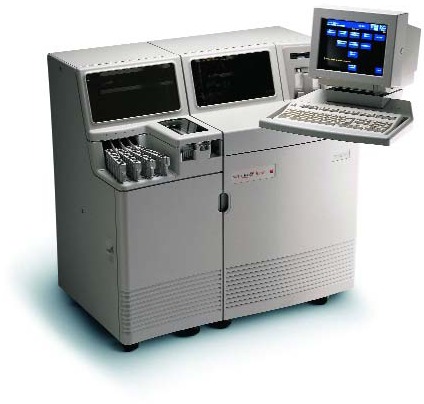
Fig. Vitros 250 Dry chemistry analyzer

Reflectance measurements are made using both diffuse and specularly reflected light.In diffuse reflectance, light is scattered in all directions from the sample.Provided that this scattered light can be collected onto an optical detector, the surface reflectance may be measured either at a given wavelength, or by performing a scan over a range of wavelengths. Such a wavelength scan can then be used to characterise colour.

A reflectance spectrophotometer is similar to a standard UV/Visible spectrophotometer.It should have a bandwidth narrow enough to provide well resolved visible spectra yet wide enough to provide a good energy level for diffuse reflectance measurements. The reflectance spectrophotometer must also have optics and electronics systems of high sensitivity, and should be able to physically accommodate reflectance and transmission accessories. The adapted spectrophotometer must be able to make measurements both at selected fixed wavelengths or perform scans over the complete wavelength range.

In dry chemistry, slides are dry, multilayered analytical elements coated on polyester supports. A small amount of patient sample is deposited onto the slide and evenly distributed to all of the layers. The spreading layer contains the appropriate substrate and other components needed for the reaction. The analyte in the sample catalyzes the reaction sequence to yield products which absorb light at wavelengths in various regions (340 – 680nm), diffuses into the underlying layer, and is monitored by reflectance spectrophotometry. The test types are colorimetric, enzymatic end point, two-point or multi-point rate, or potentiometric. The rate of change in reflection density in converted to enzymatic activity or the amount of colored complex formed is proportional to the analyte concentration in the sample.


Specimen requirement:

2 ml of serum collected in a red top tube with a serum separator (gel barrier). Centrifuge the specimen after it has clotted to prevent hemolysis. Send to the lab at room temperature. If the blood is not sent to lab the same day it is drawn, centrifuge the specimen and refrigerate. Serum that is hemolyzed and/or lipemic may interfere with some chemistries and may be rejected.

Tuesday, January 1, 2013

Fertility Profile for women


Women's Fertility Profile

Why is this test important? 
The Women's Fertility Profile is a comprehensive set of lab tests that will provide a foundation with any hormonal imbalances as they relate to reproductive issues including infertility.

Recommended for: Women who have abnormal menstrual cycles, abnormal or heavy vaginal bleeding, infertility, symptoms of menopause, or any other hormonal alterations; fatigue, moodiness, low sex drive, loss of muscle tone, increased body fat.


What does the test include? The Women's Fertility Profile includes:

  • Comprehensive Thyroid Testing Profile with TSH
  • Thyroid Peroxidase Antibody (TPO) Thyroid Blood Test
  • Progesterone Ovarian Function Blood test
  • Testosterone (Free and Total) Hormone Test,
  • DHEA-S Hormone Blood Test
  • FSH and LH Hormones Fertility Blood Testing Profile
  • Estradiol Hormone Blood Test

Fertility Profile for men


Men's Fertility Profile

Why is this test important? 
The Men's Fertility Profile is a thorough lab testing analysis for participants focusing on hormone imbalance which includes symptoms of infertility and erectile dysfunction.

Hormones are a chemical substance secreted by one tissue and traveling to another to affect other tissues in your body. They act as chemical messengers. Maintaining proper balance of these important "messengers" is key to optimal health. These sex hormones are involved in the growth, maintenance, and repair of reproductive tissues. But that's not all. They influence other body tissues and bone mass as well.


What does the test include? The Men's Fertility Profile includes:

  • Comprehensive Thyroid Testing Profile with TSH
  • Testosterone (Free and Total) Hormone Test,
  • Prostate Cancer Test (PSA)
  • Estrone Hormone lab test
  • DHEA-S hormone lab test
  • Thyroid Peroxidase Antibody (TPO) lab test
  Plus
  • Follicular Stimulating Hormone (FSH) Fertility Blood Test
  • Luteinizing Hormone (LH) Fertility Blood Test

Related Posts Plugin for WordPress, Blogger...