Wednesday, September 25, 2013

RBC Metabolism Notes (Part 4) : Maturation of RBC and role of Folic acid

MATURATION OF RBC - ROLE OF FOLIC ACID & VITAMIN B12 IN DNA SYNTHESIS


FOLIC ACID

  • Folic acid (or folate) plays a key role in one-carbon metabolism, and is essential for the biosynthesis of the purines and the pyrimidine, thymine. 
     
  • Folic acid deficiency is probably the most common vitamin deficiency in the U.S., particularly among pregnant women and alcoholics.

Structure of Folic Acid

  • Folic acid is composed of a pterin ring attached to p-aminobenzoic acid (PABA) and conjugated with one or more glutamic acid residues.

RBC Metabolism Notes (Part 3) : Energy metabolism


ENERGY METABOLISM
  • Although the mature red cell contains the enzymes required for glycogen metabolism, the balance between synthesis and utilization is such that no significant amount of glycogen accumulates within the cell under normal circumstances. 

  • Glycogen may accumulate, however, in glycogen storage diseases types III and VI.

RBC Metabolism (Part 2) : Mechanisms of preventing oxidative denaturation of hemoglobin

  • Fig. Enzyme that converts MetHb to Hb
    Known mechanisms of preventing or reversing oxidative denaturation of hemoglobin in the erythrocyte include 
    • the methemoglobin reductases
    • superoxide dismutase
    • glutathione peroxidase
    • catalase.
(Fig. in left NADH_cytochrome_B5_reductase)
Methemoglobin Reduction
  • Most methemoglobin in the erythrocyte is reduced through the action of an enzyme cytochrome b5 methemoglobin reductase, which acts in the presence of two electrons carriers, cytochrome b5, and NADH.

Tuesday, September 24, 2013

RBC Metabolism Notes (Part 1) : Stages of oxidative denaturation of Hemoglobin

OXIDATIVE DENATURATION OF HEMOGLOBIN: IT’S REVERSIBILITY AND PREVENTION

INTRODUCTION

  • Oxyhemoglobin in solution gradually undergoes autoxidation, becoming methemoglobin (HbFe+++).
  • The rate of oxidation is enhanced by conditions such as increased temperature, decreased pH and presence of organic phosphate and of metal ions, and partial oxygenation of hemoglobin. To bind oxygen reversibly, however, the iron in the heme moiety must be maintained in the reduced (ferrous Fe++) state, despite exposure to a variety of

Monday, September 16, 2013

Neurotransmitter : Overview and Functions

What are Neurotransmitters?  How do they affect your life?
Just like hormones govern many chemical functions in the body, the brain's chemical functions are governed by messengers called neurotransmitters.

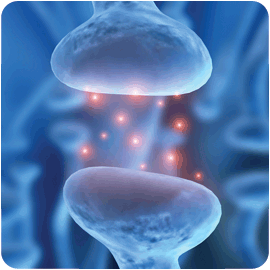
Fig. Neurosynaptic transmission
A neurotransmitter is a chemical messenger used by neurons (nerve cells) to communicate in one direction with other neurons. These neurotransmitters are either excitatory or inhibitory. Each cell receives its instructions through nerve processes called dendrites and it passes on instructions to the next cell through its axon. The gap between the axon of one cell and the dendrite of the next is called a synapse.

Special molecules in the dendrite are called receptors. They are shaped to receive only one type of neurotransmitter, which fits it like a key in a lock. The result is that if an excitatory
Related Posts Plugin for WordPress, Blogger...